The best historic structures lug their age lightly. A Georgian townhouse with block that blushes at sundown, a shingle-style seaside villa that sings when the wind happens the cliff, a sedimentary rock manor whose smokeshafts draw the eye prior to the door does. On these roofs, every shape matters. Which is why a custom-made cupola, correctly developed and effectively made, does more than vent the attic or crown a ridge. It restores intent. It ends up the structure. It tells the building's tale from the highest possible line.
Designing and making customized cupolas https://www.tumblr.com/straightmagnificentlycanthrope/815926489058066432/roofing-vents-that-disappear-custom-low-profile for period residential or commercial properties is equivalent parts scholarship and craft. You begin with drawings, pictures, and ideas in the eaves. You finish with a sky-borne object that feels inevitable, as if it has constantly been there. The distinction in between nearly appropriate and best lives in a lots choices: the pitch of the rooflet, the reveal of the cornice, the softness of a span, the method the patina will stroll down the steel in 5 wintertimes. That is where knowledgeable hands matter.
What a cupola truly does, beyond ornament
Ventilation turns up initially, and it should. A cupola can aid pull cozy, damp air out of a roof assembly if the apertures and baffles are sized properly. Yet on a duration home the cupola's key work is aesthetic structure. It focuses the roofing system. It brings upright energy to long, low aircrafts. On carriage houses and barns, it makes use of louvers, lanterns, or glazed lights to punctuate the perspective. On seaside houses, it becomes a lookout, a little space that steals views.
In method, a personalized cupola does 4 tasks simultaneously. It ventilates discreetly, withstands climate with elegance, deals with range truthfully, and lugs product language up from the body of the building. Overlook any one of those and the roofline looks off, even to an untrained eye. Gutters can be forgiving; cupolas are not.
Reading a duration roofline before you draw a line
Before I illustration, I walk the site with a notebook and a pair of field glasses. You discover more from the ground than you do at the preparing table. I measure the sightlines from the technique and from the garden side. I count training courses of slate and note their widths, because slate sizing telegraphs period and region. I look at the bed molding under the cornice to confirm the account family members. Then I stand at the ridge and take a look at the wind. On exposed websites, the cupola's joints and cap geometry issue as much as the beauty.
Two stories duplicate themselves. On a 1920s gambrel in Marblehead, we discovered the ghost of a previous light in the roofing framework, reduced when asphalt shingles changed cedar. The mounting told us the initial width to a fifty percent inch. We placed a copper-sheathed, louvered cupola back where it belonged, scaled to the old mark. On a Federal-era block house outside Philly, there was no proof whatsoever, yet the smokeshafts and dormers spoke plainly. High stacks with molded caps, reduced sloping dormers with fragile cheek trim. That language led us to a slender, octagonal light, painted a conventional off-white with a lead-coated copper roofing, only 5 feet throughout on a 46-foot ridge. Underrated, straightened with the chimneys as opposed to taking on them.
Proportion: the peaceful regulation you ignore at your peril
Design solutions exist for cupola sizing. The individual wisdom says approximately one inch of cupola size per foot of structure length, or a cupola base at 1/10 to 1/12 of the ridge size. These serve starting numbers, especially on barns. Period residences ask for even more sensitivity. Extremely pitched roofings compress the viewed size. Deep entablatures make cupolas feel much shorter than they are. Dormers can crowd or overshadow a cupola if the rhythm breaks.
I keep three tests in mind. First, from 60 feet, does the cupola checked out as a single, systematic mass instead of a pile of components. Second, does the louver or light percentage resemble the nearby window's muntin rhythm. Third, does the cornice account align, in section, with what the primary cornice does, also if the range lowers. When those link, the cupola feels like a natural extension of the style. When they do not, it really feels store-bought, even if it is not.
Materials that mature well, not simply look excellent on setup day
Cupolas live difficult lives. They sit in UV, take wind on the chin, and dropped water in every period. A period building should have materials that thrive because duty. You can construct cupolas in repainted cedar, mahogany, or high-density urethane. You can sheath them in copper, zinc, or lead-coated copper. You can glaze them in repair glass or laminated safety and security glass that resembles it.
Copper continues to be the benchmark for revealed metal due to the fact that it tells an attractive time story. In six months it browns, in 2 to five years it environment-friendlies depending on exposure, air high quality, and drainage chemistry. Lead-coated copper offers a quieter, pewter-like patina that suits Federal and Georgian houses, where flash is undesirable. Zinc is an option for cool, continental palettes, with a velvety grey that rests pleasantly close to sedimentary rock and slate. Painted wood, when milled correctly and back-primed, can last 3 years between major treatments if the roofing system cap keeps water moving. I have drawn 40-year-old cedar louvers off a Maine carriage house where just the south face requested attention.
Some customers desire maintenance-free. There is no such point on a roof, yet there are smart concessions. High-density urethane for the entablature and pilasters, with copper for the cap and blinking, can hold shape and coating with cycles that would worry wood. The technique is to maintain the touch points, the areas the eye reviews closely, in typical product. A repainted urethane frieze looks great 40 feet up. A plastic louver does not.
Ventilation that appreciates the envelope
A cupola that moves air well and does not invite water is a little design job. On barns and unconditioned attics, generous louvers, insect displays, and a clear pile path do the work. On conditioned attics and roof coverings with spray foam, points obtain even more complex. You might need passive vents only for visual fidelity, without any energetic air flow. Or you may separate the cupola's vent course from the conditioned assembly, using baffles and secured visuals so the structure does not take a breath where it needs to not.
We dimension louver cost-free location to the attic room's consumption capability, not some arbitrary target. If the soffits supply 200 square inches of web cost-free area, the cupola's louvers should match within 10 to 20 percent so the system balances, assuming a ridge or gable air vent is not in play. Sloped baffles inside the cupola, typically in marine-grade plywood or steel, shed windblown rainfall away from the aesthetic. In storm zones, I favor deeper return folds in the louver blades and weep paths that allow water getaway without saturating the aesthetic framing. You really feel the difference on a January night when the wind whistles across a frozen field and the attic room remains dry and quiet.
Profiles, cornices, and the language of the house
The delight of period work is in the profiles. On a Greek Revival, the cupola's entablature wants a solid architrave, a shadow-casting frieze, and a controlled crown. On a Queen Anne, you can allow the crown run a little, allow the braces sing, and select a finial that responds to the spirelets below. A Colonial Resurgence house built with the belt-and-suspenders restraint of the 1910s requests for crisp, great moldings and no bravura.
I maintain a collection of blades, literal steel profiles that match historic moldings. Often a cupola pressures you to develop a slight decrease of a home profile, because 1:1 range looks heavy at the roofline. The examination is in the darkness. On an intense day, the entablature must register as 3 distinct, readable bands when seen from the ground. If it reads as mush, the accounts require sharpening or the reveals demand widening. Practical information sustains charm. We commonly elevate the cap flashing an additional quarter inch to deepen the darkness at the cornice without changing the molding itself.
Glazing and lights without glare
Glazed lantern cupolas are lovely, and they can be crippling if you get the light wrong. Period residences live with warm color temperature levels and soft comparison. Swap in a brilliant, awesome LED strip and the lantern blazes like a store front. I like tiny, protected components inside the lantern, 2200 to 2700 Kelvin, dimmable, with lamping hidden over an easy baffle. This way the lantern reads as a gentle, even glow that does not compete with candlelight at the windows below.
Glass desires thought also. Real remediation glass, with small waviness, is superb at the roofline due to the fact that it stimulates the sky. Laminated glass can be defined with a refined distortion layer that evokes it without presenting safety risk. In snow country, shielded glazing and careful thermal breaks protect against condensation that would certainly rot muntins. Hardware must disappear. Marine-grade bronze hinges and remains, repainted to match, give life span that affordable iron cannot.
Integrating the remainder of the rooftop ensemble
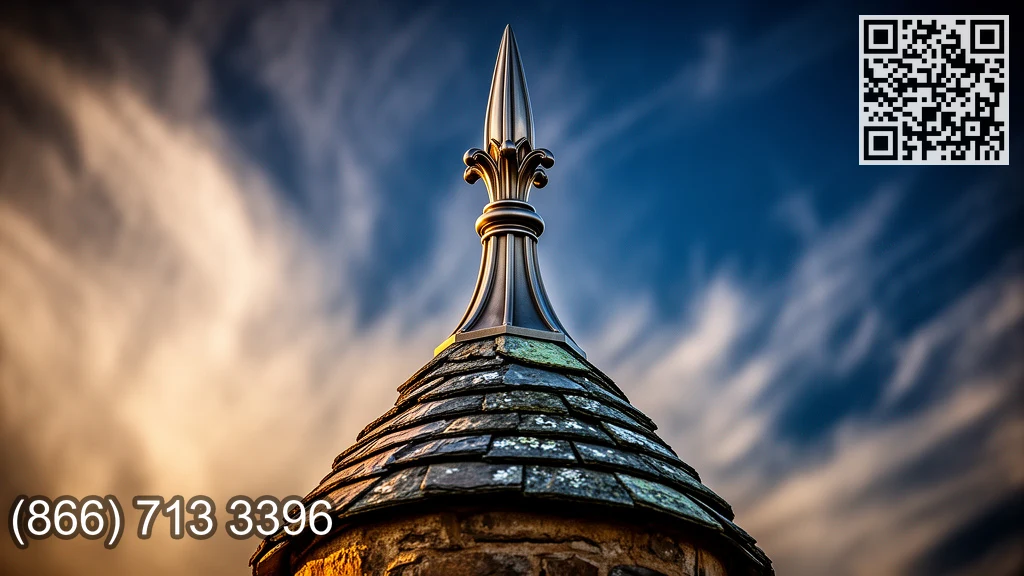
Cupolas rarely online alone. Historical roofs lug a family members of elements, and harmony issues. Personalized Finials, for instance, must speak with the cupola's cap. A copper acorn finial, 24 to 36 inches tall on a 12-foot-high lantern, feels willful when the base echo matches the cupola's ovolo. If you use a spearhead, maintain it under the sightline of the local smokeshaft pot or it will employer the roof.
Custom Dormers need similar politeness. Dormer cheek profiles and sill information commonly offer you the density and disclose that will certainly look precisely cupola pilasters. If dormers are reduced and vast, a cupola that shoots too high will certainly look top-heavy. I in some cases tip a cupola down the ridge a foot or two to find balance with an unbalanced dormer run. To the eye it checks out as centered on the make-up, not the ridge measurement.
Ventilation equipment has its very own discussion. Customized Roofing Vents on secondary slopes can get the cupola's louver blade spacing so every little thing feels of a piece. Personalized Snow Guards, especially on standing joint or slate roofs, must be laid out with the very same roughness as muntins. I favor reduced, duplicating snow guards in bronze or stainless, patinated, aligning their horizontals with the cupola's louver rails. It appears fussy, but from the yard the roofing system reviews as one instrument.
Functional details can be elevated to accessory in the right hands. Personalized Leader Boxes, typically called conductor heads, rest below the eaves gathering water prior to it runs down. When the house requires it, I raise an information from the cupola's entablature and repeat it on the leader box. A refined bead or a shallow cyma reversa can make the whole drainage system feel bespoke. Nearby, Custom-made Smokeshaft Shrouds that suit the cupola's steel and aging keep wind-blown rainfall out of flues without aesthetic discord.
Metalwork that makes its keep
At the heart of a terrific cupola is the metalwork you barely see, the solder joints, the hemmed sides, the means the cap folds let water race off without a second thought. Shops that live on roofing systems leave no raw cut exposed. Every edge is hemmed or folded to maintain capillarity in check. Every solder joint is brilliant and clean, after that acid-neutralized and rinsed so the aging develops also. You can tell that made the item by running a finger along the edge. If it is buttery and safe, it was made by somebody that cares.
For customers that desire uniformity across the roof, a solitary maker for all rooftop metals is a quiet luxury. Companies like Salvo Metal Works deal with the ensemble as one payment. The cupola cap, the chimney shadows, the leader boxes, the finials, the snow guards, all come out of the same steel stock so they mature with each other. That is not fussy. That is how you stop the roof from looking like a patchwork in five years. I have actually seen copper from different mills patinate at various rates, one area going delicious chocolate while its next-door neighbor stays pink. When the source matches, the roof covering periods like a leather chair.
Anchoring, visuals, and what takes place when the wind howls
A cupola is a sail. On a 90-mile-per-hour gust front, uplift forces on a small 4-by-4 base can climb up into the thousands of pounds. If you anchor a cupola by wishful reasoning, it will move. If you slow with a properly flashed visual into architectural framework, it becomes part of your home. I specify aesthetics in pressure-treated lumber or, on flat spots of low-slope roof coverings, in welded aluminum with thermal breaks and wood barring. Stainless screws or screws run through the aesthetic into doubled rafters or a mounted platform, never ever simply sheathing.
Flashing is choreography. Step flash the uphill side right into the tiles or slate, cover the curb in peel-and-stick as an additional measure, and then cap with pre-formed copper or lead-coated copper frying pans. On slate, I will usually reduce full-width slates to create tidy flashing lanes so you do not end up with a jumble of fiddly cuts that invite leakages. It takes longer and conserves years of headaches.

In snow nation, a baffle or cricket uphill of the cupola maintains snow from packaging. In environments where ice dams haunt eaves, I run a de-icing cord in a hidden chase to a discreet electrical outlet near the cupola base, just if essential. Better to take care of insulation and air sealing listed below, yet period residences sometimes offer you the roofing they give you.
Patina, paint, and the clockwork of maintenance
Luxury does not mean no maintenance. It implies the upkeep is civil, prepared, and a pleasure to care for. Copper and lead-coated copper intend to be left alone. Do not scrub patina. Do not lacquer. Allow the roofing system write its poem. Repaint wants a cycle. On timber cupolas in the Northeast, a seven to ten-year outside paint cycle keeps points fresh. South and west faces age faster. Usage oil-primed, acrylic topcoats with high solids, and make certain every cut end is sealed at the store, not on the roof.
Louvers gather dust and plant pollen. A once-a-year rinse with a low-pressure hose from a lift, not a pressure washing machine, maintains them breathing. Lightning protection deserves a reference. A roof item that peaks over the ridge should link to a lightning protection system where code and prudence recommend it. Run the conductor elegantly, repaint it out, and land it on a ground rod that does its peaceful work.
Where themes aid, and where they do not
It is alluring to choose a brochure cupola, repaint it, and call it great. On some barns that functions. On duration homes it rarely does. Themes help for interior clearances, for air vent location, for basic ratios. Yet every website will certainly teach you something new. Sun angles, wind patterns, the means surrounding trees frame the view, the means a smokeshaft throws a shadow at 4 p.m. in October. A customized cupola allows you tune to those points, not fight them.
There are also facts of budget plan and schedule. A totally bespoke lantern in copper and mahogany can take 8 to twelve weeks from authorized illustrations to mount, and the expense typically lands in the high four to reduced 5 figures for residential work, rising with dimension and metal choice. Smart use of semi-custom components can bring that down, especially when framework is typical and the skin is customized. The risk is false economy. A cupola you change in 10 years since it never rather belonged costs greater than the ideal one built once.
A brief guidebook to era-appropriate cues
- Georgian and early Federal roofing systems desire restriction: octagonal or square lanterns with slim muntins, lead-coated copper caps, and tall, slim proportions that defer to chimneys. Greek Revival supports bolder entablatures, wider friezes, and square strategies, often with basic louvered faces as opposed to glass. Victorian and Queen Anne periods permit perky finials, multi-tiered lanterns, and richer braces. Keep the power but slow with genuine steel and straightforward wood. Shingle Design plays magnificently with battered bases, shingled cupola bodies, and bronze or copper accents that will certainly salt-stain right into verse on coastal houses. Colonial Rebirth, particularly interwar, suches as sanitation and proportion more than ornament. Painted wood with a crisp cornice and a small Custom-made Finial feels faithful.
Coordination with the rest of the project team
Cupolas touch framework, waterproofing, electric, and occasionally mechanical systems. The cleanest installs happen when the designer, GC, contractor, and metal maker work from the exact same package. We draw the visual and blinking as component of the roof set, not an afterthought. We size channels for lights and, if needed, lightning security. On slate or tile roofing systems, we sequence the install so the cupola lands before the final programs, not after, to prevent forced cuts.
A skilled contractor earns their cost here. On a current slate substitute, our roofing professional pre-flashed the visual in copper, laid the slate around it with neat, full training courses, after that went back to establish the cupola with us so joints married cleanly. That hour of choreography conserved a day of chasing after leaks four months later.
When a cupola is not the answer
Not every roof wants a crown. Short, active rooflines with multiple gables and dormers can look fussy with a cupola added. Low-slope roofing systems on specific Craftsman bungalows do far better with a ridge screen or none in all. Houses with leading smokeshafts often prefer the quiet of open sky in between heaps. I have actually suggested clients to invest in Personalized Roof Vents disguised in ridge trim and in refined Personalized Smokeshaft Shrouds as opposed to a cupola that would contend. The goal is not to check a box. It is to finish the composition.
The pleasure of getting it right
There is a moment, late in the day, when scaffolding is gone and the light comes reduced and warm. The new copper has not yet browned. The paint is still taut. From the grass you seek out and the cupola sits where it ought to sit, tranquil, proportioned, unselfconscious. Your house all of a sudden looks finished, not renovated, as if the masons and joiners from a century ago had gone back on a Friday and nodded.
That feeling is gained. It comes from illustrations that appreciate the structure's language, from materials that do not fight the weather, from metalwork with sincere hems and clean solder, from little decisions about light shade and louver blade spacing that no person will ever call however every person will certainly feel. It also originates from a self-displined sense of household throughout the roofing. When the Personalized Finials, the Custom Dormers, the Customized Leader Boxes, the Custom-made Roof Covering Vents, the Personalized Snow Guards, and the Personalized Smokeshaft Shrouds talk the exact same dialect, your house reviews as one idea. Shops like Salvo Metal Works make that comprehensibility simpler, not by imposing a style however by honoring yours, and the structure's, with a stable hand.

A duration residential or commercial property does not request even more. It requests far better. A custom cupola, conceived with treatment and implemented with craft, is a small things with a huge role. It weaves the skies to your home and the house to its history, one louver, one joint, one soft radius at a time.